
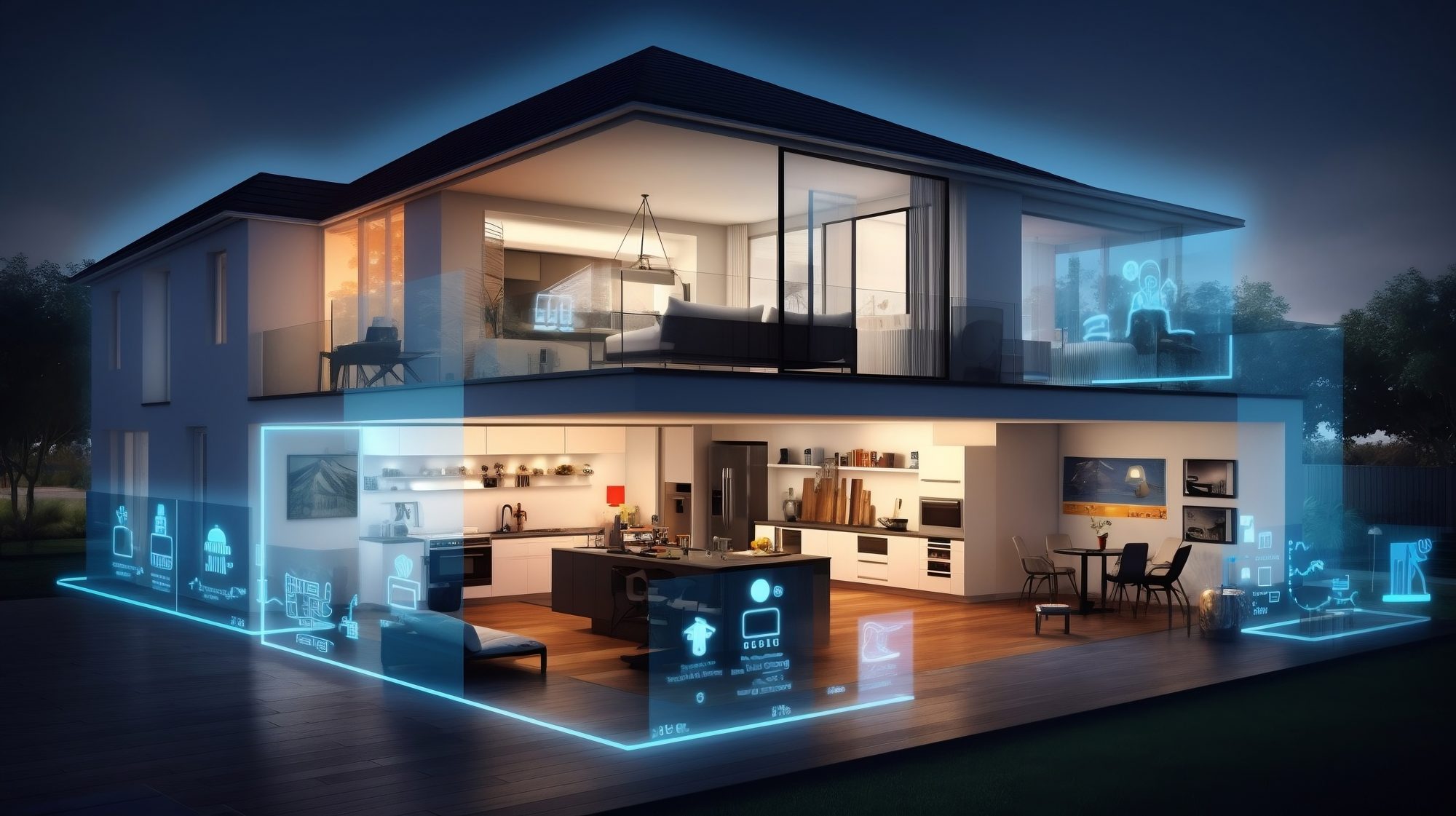
Grenton Building Automation
Smart home and smart building control – greater comfort, lower energy consumption and increased security
What do you get with the Grenton system?
Lighting, heating–cooling, shading and security can be automated through a single central “brain” – both in residential and business environments.
Comfort
Scenes, schedules and automated operation – less manual switching, more comfort.
Energy efficiency
Room-by-room control, smart modes and remote monitoring – reducing unnecessary consumption.
Security
Presence simulation, notifications and logic-based functions – integrable with alarm and security systems.
What can Grenton be used for?
Explained through real-life scenarios – suitable for both residential and business use.
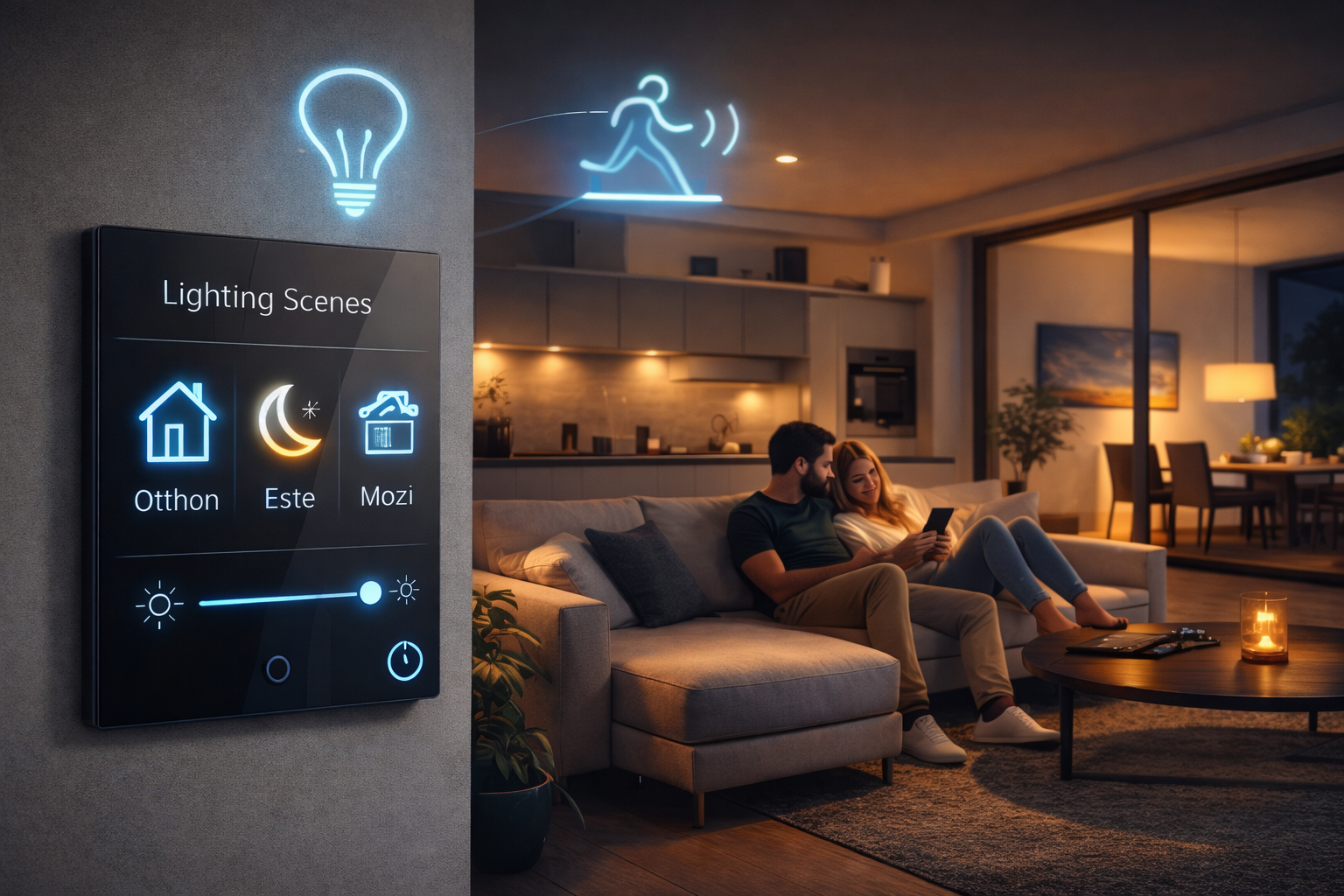
Lighting control and scenes
- Scenes: “Home”, “Evening”, “Cinema”, “Away” – activated with a single touch
- Automation: motion detection, schedules, sunset / ambient light logic
- Brightness control: dimming and ambient lighting (with compatible dimmer solutions)
More comfort at home, and predictable, energy-efficient operation in offices and retail spaces.
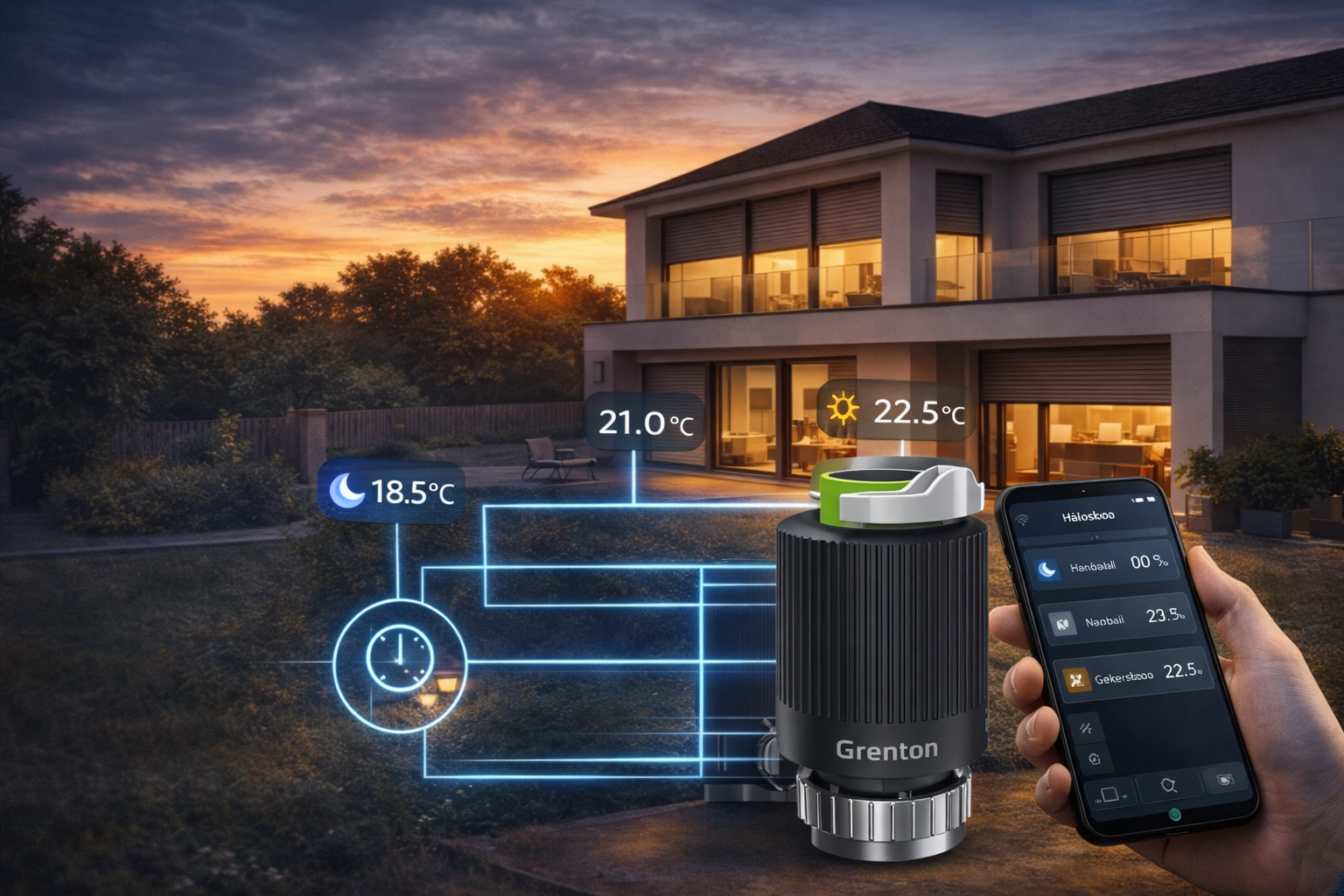
Heating–cooling zone control (room by room)
- Temperature control: individual room programming and fine-tuning
- Operating modes: home / away / night
- Remote control: monitoring and intervention from mobile devices
The goal is thermal comfort exactly where and when it is needed – without unnecessary overheating or overcooling.
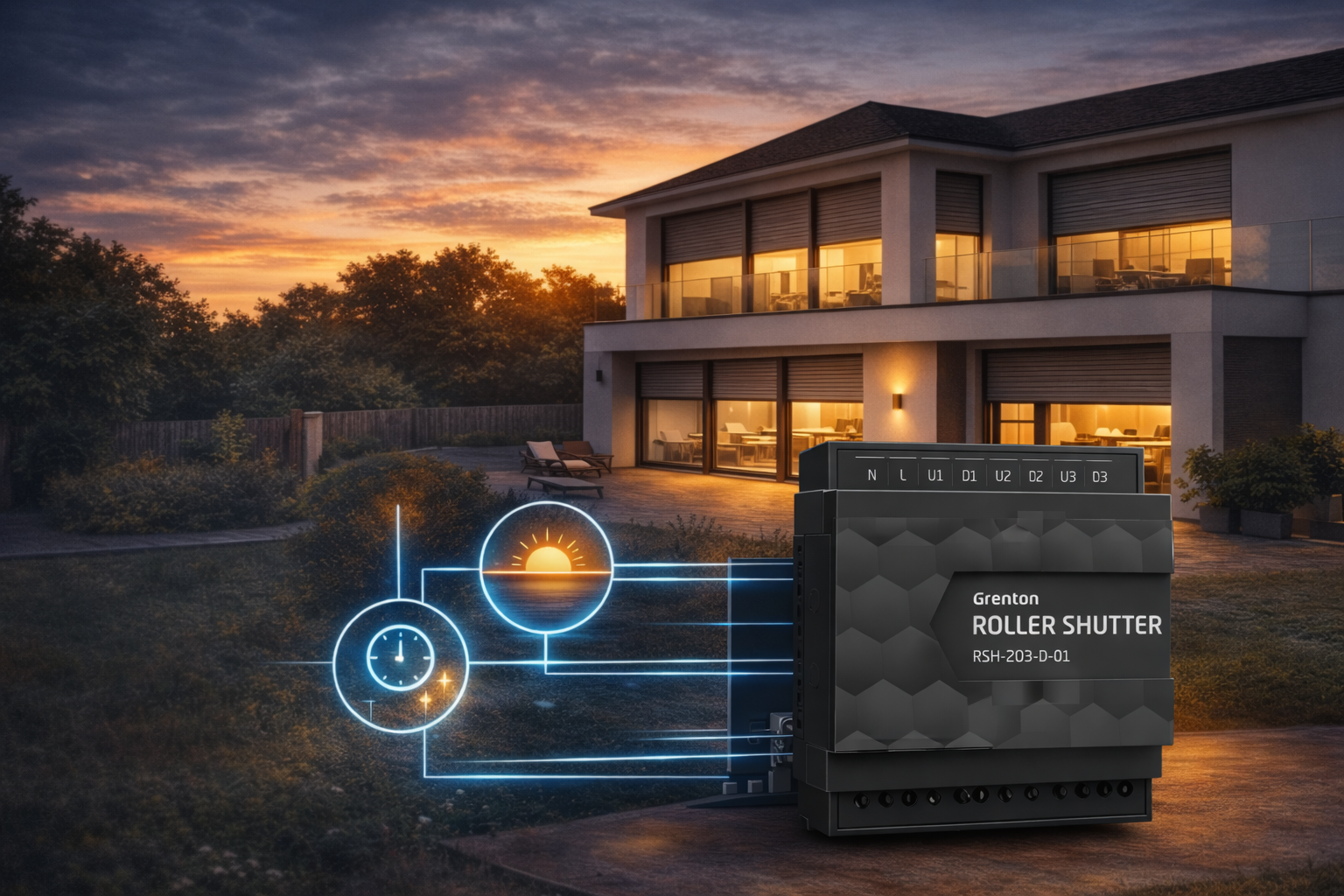
Shading control (shutters, blinds, roller shades)
- Scheduling: morning up / evening down, aligned with sunrise and sunset
- Convenience features: group control, one-button operation
- Energy savings: supports cooling in summer and reduces heat loss in winter
Comfort at home, and a consistent appearance with stable automated operation in business environments.
Security logic and notifications
- Presence simulation: realistic operation of lighting and shading during absence
- Notifications: instant alerts for events (door opening, motion, fault signals)
- Integration: compatible with cameras, alarm and access control systems
Not just protection – but transparent and controllable operation.
How does it work? (technical overview)
From an installer or operator perspective: a modular, expandable system designed for reliable operation.
Modular architecture
- Central controller with input and output modules
- DIN-rail mounted components (typically in an electrical cabinet)
- Logic, schedules, scenes and automation rules
- Fully planned and documented system structure
Design → Installation → Commissioning
- Requirements assessment (B2C / B2B)
- Definition of zones and functions (lighting / HVAC / shading)
- Module selection and wiring design
- Programming, testing and handover
Which “product” is used for what?
Not a catalog list – but a role-based explanation. Exact module selection is always based on the site and requirements.
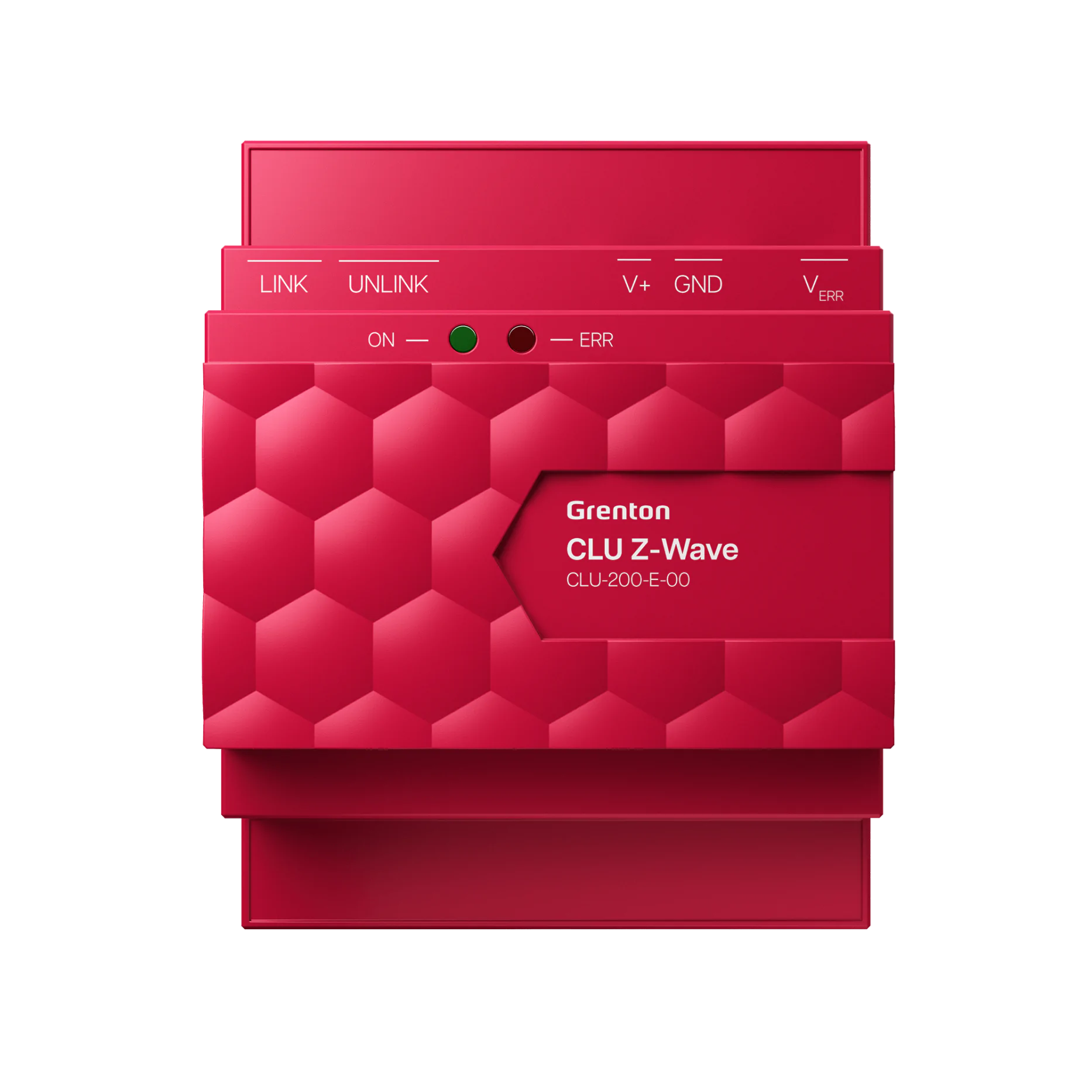
Central controller / “system brain”
- Purpose: runs automation, scenes and logic
- Why it matters: manages all functions in one place
- Who benefits: comfort for residential users, stable operation for B2B
This is the component that connects lighting, HVAC, shading and security logic into a single system.
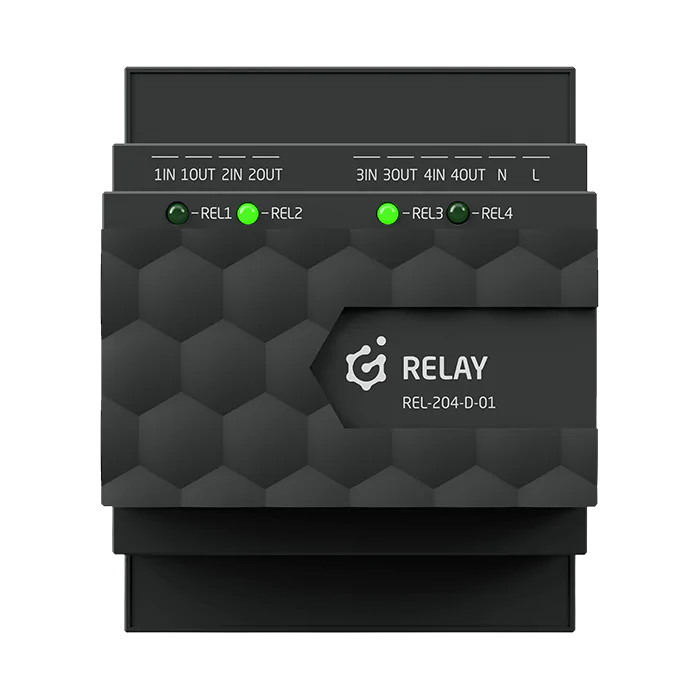
Output modules (relays, dimmers)
- Relay: switching lights, sockets, gates, solenoid valves
- Dimmer: brightness control and ambient lighting
- Typical use: lighting circuits, shading motors, mechanical equipment
Outputs are the components that physically control the connected devices.
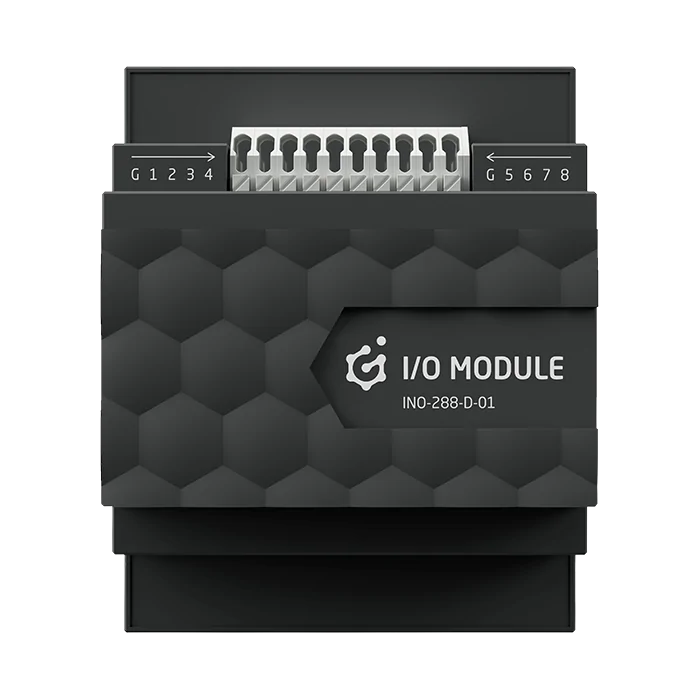
Input modules and sensors
- Switches and push buttons: wall-mounted, counters, reception desks
- Sensors: motion, opening, temperature (as required)
- Role: provide signals to which the system reacts
Inputs make the system responsive, while logic makes it intelligent.
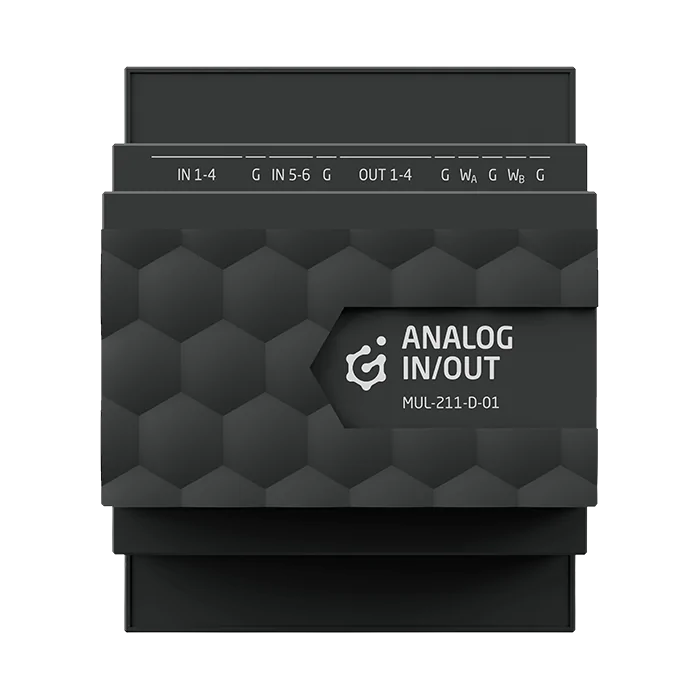
HVAC / zone control (heating–cooling)
- Zones: room-based control and operating modes
- Schedules: daily and weekly logic, presence and absence
- Integration: can be synchronized with other systems if required
This is typically where the greatest energy savings can be achieved – with proper zone planning.
Where is Grenton ideal?
The same system with different goals: comfort and utility optimization in residential use, and stable, documented operation in B2B environments.
Family homes
Scenes, zoning and shading – more comfortable everyday living.
Offices / retail
Automated lighting and climate – consistent operation, less waste.
Industrial environments
Reliable control, logic-based operation and transparency.
Apartment buildings
Automation of shared areas and building services.
Why Infinity Services?
We don’t just sell devices – we design, implement and support complete systems long term.
End-to-end implementation
- requirements assessment and concept design
- electrical and system planning
- installation and implementation
- programming and commissioning
- training and handover
Support and operation
- local-language support
- troubleshooting, extensions and fine-tuning
- maintenance options for business environments
- planned system scalability